
Faith and development
The Shape of Love
A reflection on Jesus, compassion and community-led development in Shan State, presented in a popular, accessible edition.
View book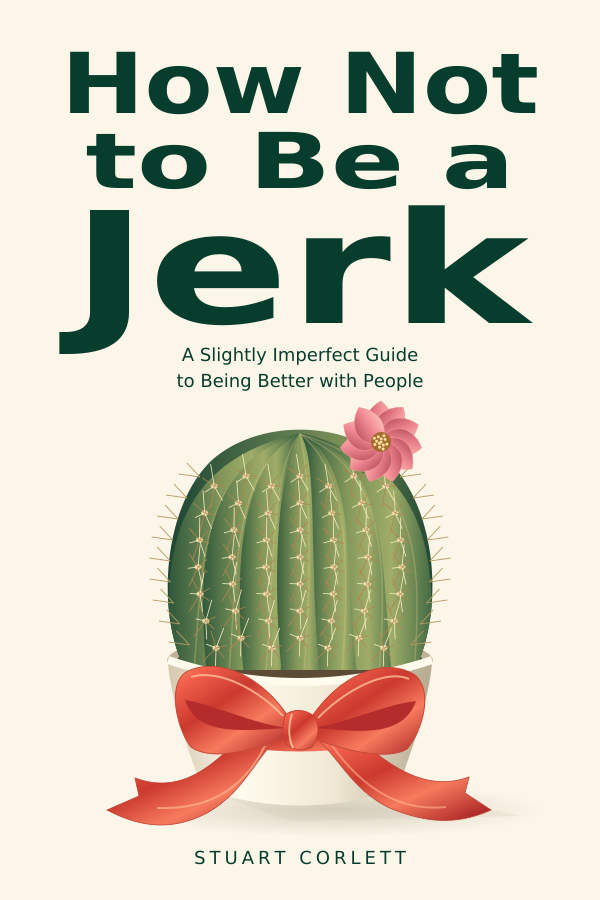
Humour and relationships · Stuart Corlett
A Slightly Imperfect Guide to Being Better with People
A little less certainty. A little more listening.
Also available from
Check the selected Apple Books store for editions and availability.
It is easy to think of someone who might need a book called How Not to Be a Jerk. The more uncomfortable possibility is that someone else might be thinking of us. This guide begins with that shared imperfection and brings humour to the habits that make relationships harder than they need to be.
Across eleven chapters, Stuart Corlett explores listening, giving advice, offering unwanted help, taking sides, responding online, setting boundaries and making apologies. The focus is on the ordinary moments in which confidence outruns curiosity and helpful intentions miss their mark.
With room for mistakes and self-recognition, the book encourages readers to pause, pay attention and make better choices in the next conversation. It is an invitation to practise being easier to live with, without pretending any of us has finished learning.
Read before you choose
From the Introduction
There is a particular pleasure in seeing a book called How Not to Be a Jerk. Somebody comes to mind immediately.
Perhaps several people. You may already be considering a bulk order.
Then comes the less comfortable possibility that somebody else has seen the same title and thought of us.
I suggest we begin there. We can keep our mental gift list, but for the next few pages, let’s put it down.
Most ordinary encounters give us very little time to consider what sort of person we are becoming. Someone interrupts. A message arrives. A colleague makes a mistake we have already explained twice. We respond, and only later discover that the words we considered beautifully clear were received as a small personal demolition.
Sometimes the other person misunderstood. Sometimes we were careless. Sometimes both happened. Sorting that out requires more attention than announcing that we meant well and heading off to make tea.
This book concerns those moments and the habits that grow around them. Its aim is to help us become people who are easier to talk to, disagree with, ask for help, and trust with an uncomfortable truth. We will look at familiar situations: advice that arrives before it is wanted, arguments that outlive the question being argued, help that quietly takes over, and apologies that require the injured person to do most of the work.
End of sample · © Stuart Corlett
For yourself or your book club
Discuss these after reading; answers may reveal parts of the story.
Keep exploring
A reflection on Jesus, compassion and community-led development in Shan State, presented in a popular, accessible edition.
View bookA research-informed examination of faith, influence and power that asks how Christians can speak with conviction while protecting another person’s freedom.
View bookA candid, accessible guide to following Jesus with conviction, humility and enough grace to let other people think, disagree and choose.
View book
