Humour and relationships
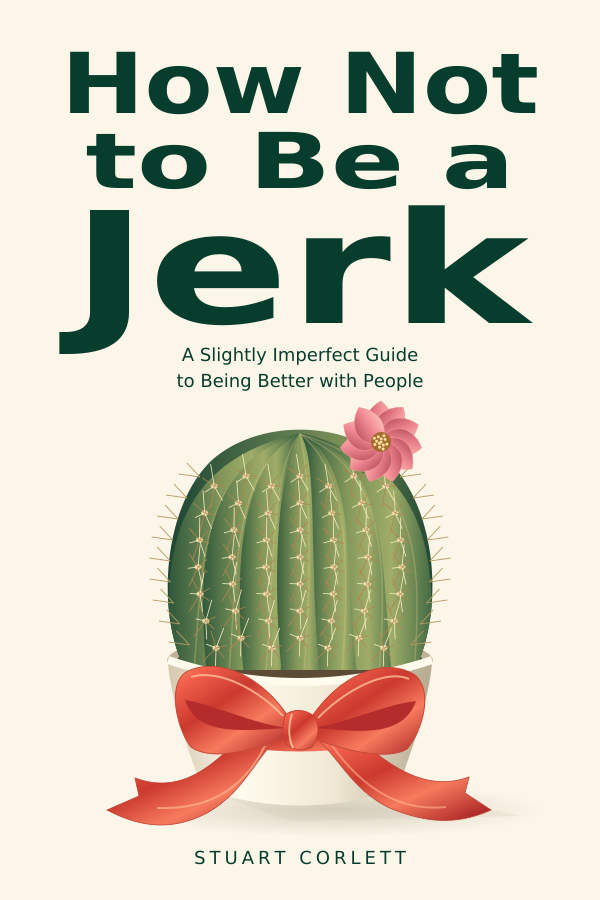
How Not to Be a Jerk
A humorous, self-reflective guide to listening, boundaries, apologies and the everyday business of being better with other people.
View book
Faith and development · Stuart Corlett
Jesus, Compassion, and Sustainable Development in Shan State
How can compassion help people shape their own future?
What happens when the desire to help meets someone else's right to decide? The Shape of Love considers Christian faith and sustainable development through Stuart Corlett's experience of humanitarian work connected with Shan State.
This popular, easy reading edition examines compassion in the Gospels alongside practical questions about power, poverty and local leadership. It asks how faith can be shared without pressure, why good intentions sometimes cause harm, and what listening requires of those who arrive wanting to make a difference.
The book invites readers to think about relationships as well as projects. Its central concern is the agency of communities: who defines the problem, who makes decisions, and whether outside support helps people shape a future they can call their own.
Read before you choose
Chapter One · The Question After the Talk
When I speak to Christian communities about Circuit International, someone will sometimes ask a question that stays with me long after the presentation.
“Where does the gospel fit into all this?”
It is a fair question. I wish my face always remembered that.
I have been talking about our work with communities in Shan State, Myanmar. About reducing poverty and helping people gain more control over their future. About the hope that better choices can make people less vulnerable to exploitation and human trafficking. Then comes the question about where the Christian part belongs.
My first instinct is to ask, “How are we not communicating the gospel?”
That reply reveals how strongly I feel. It does rather less to explain why.
The person asking may have supported Christian work for years. They may be wondering whether we speak openly about Jesus, or whether faith has become something we mention when raising money and quietly put away afterwards. They may care deeply about people knowing God. Those concerns deserve a thoughtful answer.
So does another question, which is less likely to be asked in the room where I am speaking.
What does our faith feel like to the person receiving our help?
That person may never hear my presentation. They will encounter our faith through a conversation, a decision about funding, or what happens when they disagree with a plan. They may judge our intentions by whether we listen when the answer is inconvenient.
This book begins between those two questions. I want to understand how compassion belongs within the good news of Jesus, and how that conviction should shape the way we work alongside people. Answering properly will require me to examine my own assumptions as carefully as I examine anyone else’s.
There goes the comfortable version of the book.
The question beneath the question
When Christians use the word “gospel”, we mean good news. Yet we can carry quite different ideas about what that news includes and how someone comes to hear it.
For some, the first concern is whether people are learning about Jesus, forgiveness and the possibility of a changed life. Others begin with what happens to a hungry person, a frightened family or someone whose choices have narrowed until every available option carries a risk.
I recognise myself in that second group. I also need to take the first seriously.
End of sample · © Stuart Corlett
Keep exploring
A humorous, self-reflective guide to listening, boundaries, apologies and the everyday business of being better with other people.
View bookA research-informed examination of faith, influence and power that asks how Christians can speak with conviction while protecting another person’s freedom.
View bookA candid, accessible guide to following Jesus with conviction, humility and enough grace to let other people think, disagree and choose.
View book
