Humour and relationships
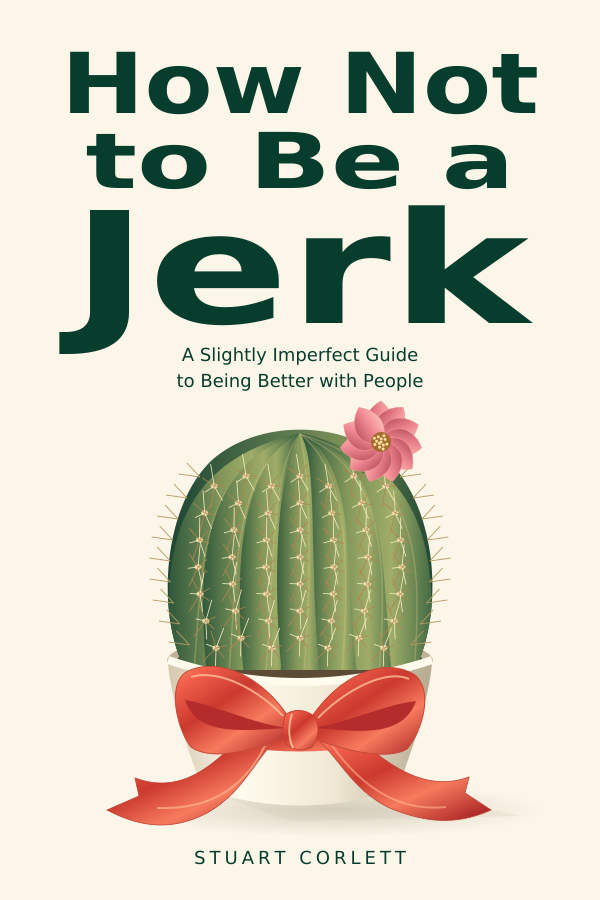
How Not to Be a Jerk
A humorous, self-reflective guide to listening, boundaries, apologies and the everyday business of being better with other people.
View book
Christian faith and practical relationships · Stuart Corlett
Faith, Conviction, and Compassion in a World Wary of Religion
Good intentions can still leave people hurt. What would greater grace look like?
With candid reflection, gentle humour and everyday examples, Stuart Corlett explores listening, belief, religious pressure, difficult conversations and the freedom to say no.
Drawing on the four Gospels and research into belief and influence, this easy-reading edition brings the questions into homes, churches and communities. It also explores how work connected with Myanmar can inform what Christians do in the West.
Eleven short chapters offer practical ideas and questions to help readers speak honestly about Jesus while giving other people room to think, disagree and choose.
Read before you choose
Chapter One · I Wish I Had Kept My Mouth Shut
There are a number of occasions in my life when the most useful contribution I could have made to a conversation was silence.
Unfortunately, I contributed words.
Quite a few words.
Some of them arrived with the confidence of a man who had mistaken enthusiasm for wisdom. I was particularly good at that in my younger years as a believer. I cared about Jesus. I wanted other people to understand why faith mattered. And, as I now recognise, I could be a jerk.
These things can all be true at once.
Looking back, I wish I had sometimes stopped speaking long enough to notice what was happening to the person in front of me. Was I answering their question? Had they actually asked one? Were they interested, uncomfortable, or simply too polite to escape?
There is no useful delete button for a conversation that happened twenty years ago. We can apologise. We can change. But we cannot decide how quickly another person recovers from our words, or whether they want to hear from us again.
To those I have hurt, I am deeply sorry.
That is where I want this book to begin: with my own need to learn.
The conversation we think we are having
Imagine this fictional conversation after a family lunch.
Someone says, “I haven’t been going to church lately.”
A believer at the table immediately feels concerned. Church matters to them. Perhaps this person matters even more. They do not want someone they love to lose something they have found precious.
So they begin.
They explain the importance of community. They point out that no church is perfect. They mention a sermon, recommend a book and offer the telephone number of a particularly approachable pastor.
The person who spoke nods.
Encouraged by the nodding, the believer continues.
By the time the conversation ends, they have produced enough material for a small conference.
On the journey home, the believer thinks, “I hope that helped.”
The other person thinks, “I wish I hadn’t said anything.”
Nobody needed to shout for that conversation to go wrong. The concern may have been sincere. Some of the advice might even have been useful at another time.
But we still do not know why the person stopped going.
Perhaps they work Sundays. Perhaps they are exhausted. Perhaps something happened that they have not yet felt able to describe. Perhaps they no longer believe what they once believed.
End of sample · © Stuart Corlett
Keep exploring
A humorous, self-reflective guide to listening, boundaries, apologies and the everyday business of being better with other people.
View bookA reflection on Jesus, compassion and community-led development in Shan State, presented in a popular, accessible edition.
View bookA research-informed examination of faith, influence and power that asks how Christians can speak with conviction while protecting another person’s freedom.
View book
