Philosophy and psychology
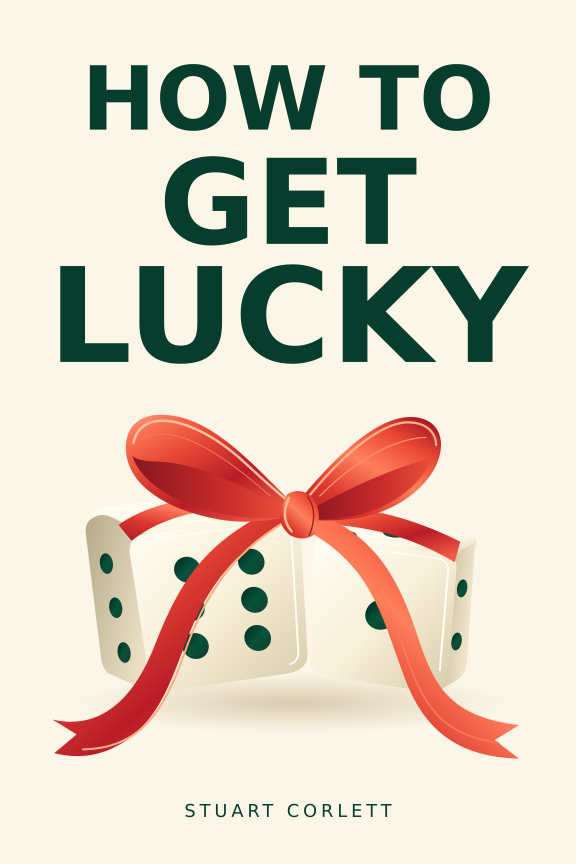
How to Become Luckier
A thoughtful exploration of chance, belief and responsibility—and a practical guide to meeting uncertainty more intelligently.
View book
Psychology, anthropology and identity · Stuart Corlett
Tattoo Imagery, Identity, Memory and Belonging
The body can carry a story without telling us how to read it.
Tattoos can tell stories of grief, survival, faith, identity, love and belonging. But can an image placed permanently on the body influence how a person thinks, remembers, feels or acts?
Drawing on psychology, trauma studies, memory research, anthropology, religion and cultural scholarship, The Remembering Skin explores tattoo imagery as a psychological and cultural phenomenon. Its central idea is cautious but provocative: a tattoo may become a permanent invitation—a durable cue that calls personal meaning, group membership, devotion, grief or change back into awareness.
The book also sets firm limits. Tattoos do not automatically determine thought, heal trauma, reveal personality or function as hypnosis. By separating direct evidence from adjacent theory and clearly labelled hypothesis, it asks what body imagery may do while warning against reading another person’s skin too quickly.
Read before you choose
Chapter One · The Mark and the Question
Why a tattoo is not simply a picture
A picture on a wall remains in a place. A picture on a phone may accompany its owner everywhere, but it must be opened. A tattoo makes a different demand on interpretation. It is fixed in living tissue, but it is encountered under changing circumstances: at work, at prayer, during sport, in intimacy, in illness, at a funeral, in a courtroom, in a photograph, while bathing a child, while ageing. The same inked image can therefore have many occasions of meaning. That temporal quality is central to its psychology.
The permanence of tattooing often attracts simplistic claims. A permanent image is assumed to produce a permanent thought, a permanent identity or a permanent wound. Yet people do not merely receive images; they interpret them. The same design can later be recontextualised as a record of youth, a family story, an embarrassment, an aesthetic object, a private joke, a moral reminder or a historical document. Research on autobiographical memory makes this unsurprising. Personal memory is reconstructed rather than replayed unchanged, and its meaning can shift as the present changes. A tattoo may be stable in material form while the narrative it cues remains dynamic.
This distinction matters for the book’s central premise. It is not the pigment that is proposed to influence thought. Nor is it the visual form in isolation. The relevant unit of analysis is a person-image relationship. The relationship includes the event of choosing or receiving the tattoo; the body site; the visible image or words; the surrounding ritual; the people who witnessed it; subsequent explanation and social reaction; and the person’s evolving understanding of what the mark means.
Klug, Camia and Rohrmann (2024) offer a direct starting point: 161 tattooed adults supplied narratives that linked many of their tattoos with autobiographical events. This establishes represented personal meaning, not a causal effect on memory or thought. Their later, smaller study examined the self, social and directive functions expressed in tattoo-event accounts (Klug, Camia & Rohrmann, 2025). The distinction between these studies matters: depicting a life event, narrating its significance and having that event reactivated by seeing the image are different findings.
What makes an image a useful cue is a separate question. Research on externally presented cues concerns access to autobiographical memories, while Butler and colleagues (2016) studied visual perspective during repeated autobiographical retrieval. Internal mental imagery is not the same thing as looking at a picture. Together these adjacent literatures motivate, but do not verify, a tattoo-specific hypothesis: a personally meaningful symbol may help reactivate a connected life story when it is actually noticed and used.
End of sample · © Stuart Corlett
Keep exploring
A thoughtful exploration of chance, belief and responsibility—and a practical guide to meeting uncertainty more intelligently.
View bookA playful title for a thoughtful book about chance: widen your opportunities, question comforting myths and make wiser choices.
View bookAn exploration of consciousness, perception and belief that reveals why asking and listening take us further than imagining another person’s point of view.
View book