
Philosophy and psychology
How to Become Luckier
A thoughtful exploration of chance, belief and responsibility—and a practical guide to meeting uncertainty more intelligently.
View book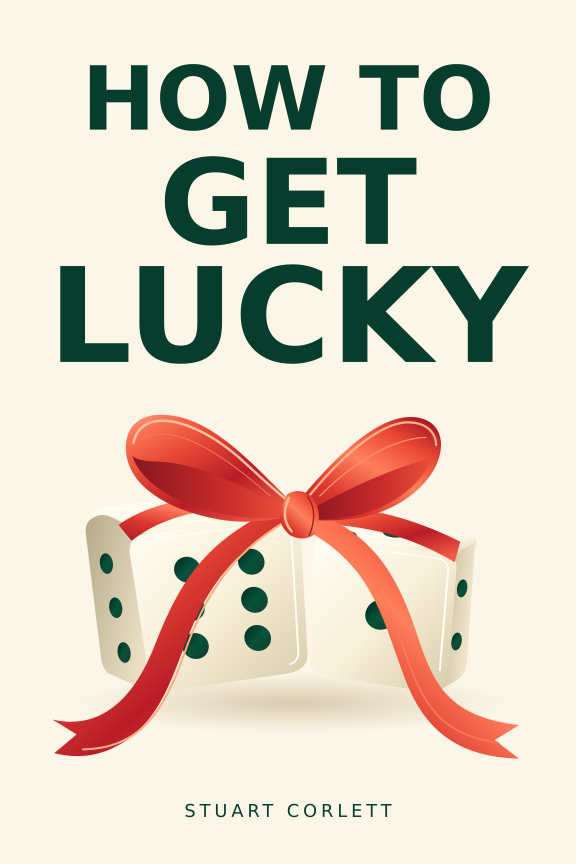
Philosophy and psychology · Stuart Corlett
Hoping to get lucky? Start by opening this book.
The same core text appears in How to Become Luckier, with a different title and cover.
Some people seem to get all the breaks. Is it fate, a lucky charm—or something we can learn?
Drawing on psychology, philosophy and everyday life, Stuart Corlett explores why we believe in luck and how we can meet chance more wisely.
Discover how to widen your opportunities, question comforting myths and make better choices—while finding a little more kindness for people whose dice land differently.
You cannot control the roll. You can change how you play.
Read before you choose
Chapter One · Horseshoes and Wheels
Sometime around the year 524, in a prison cell near Pavia in northern Italy, a Roman statesman waited to be executed. His name was Anicius Manlius Severinus Boethius, and until very recently he had been one of the most powerful men in the kingdom of the Ostrogothic king Theodoric — a consul, a scholar, a translator of Aristotle, a man whose sons had both been made consuls in the same year. Then, accused of treason on evidence he insisted was false, he lost everything: his office, his freedom, his reputation and, before long, his life.
While he waited, he wrote a book. The Consolation of Philosophy imagines a visit from Philosophy herself, who comes to the prisoner's cell to reason with him about his misery, and one of the figures she brings into the argument is Fortune. Fortune, in Boethius's telling, has a wheel. She turns it without pause, raising some people up and bringing others down, and she has no interest at all in who deserves what. Her nature is change. The man who complains that she has abandoned him, Philosophy suggests, has simply misunderstood what she is: he climbed onto a turning wheel and is surprised to find that it turned.
The image spread through the Middle Ages with remarkable force. The Wheel of Fortune was carved into cathedrals, painted in the margins of manuscripts and sung about in poems, often with a crowned king at the top, a falling man on one side, a rising one on the other and a figure crushed beneath. For something like a thousand years, educated Europeans who wanted to picture the way good and bad things happened to people pictured a wheel, turned by a power that was indifferent to them.
It is worth noticing what Boethius did and did not believe. He did not think Fortune could be bribed, charmed or persuaded. His whole point was that she could not, and that the only protection against her was to value what she could not take away. In a sense he was describing chance, and describing it rather well. What the Middle Ages made of his image, however, was often something else — a goddess with moods, who might be courted, and who seemed to favour some people over others.
That shift, from chance to a power with favourites, is the subject of this chapter, because it is the shift from chance to luck.
End of sample · © Stuart Corlett
Keep exploring
A thoughtful exploration of chance, belief and responsibility—and a practical guide to meeting uncertainty more intelligently.
View bookAn exploration of consciousness, perception and belief that reveals why asking and listening take us further than imagining another person’s point of view.
View bookAn interdisciplinary exploration of how beliefs shape identity, health, belonging and conflict—and how curiosity can help us live together more beautifully.
View book
