That freedom is part of the pleasure of fiction. It is also a reason to be careful when a story borrows the language of science.
I like to study science and communicate through fiction. My interest often begins with a possibility. Could something work differently from the way we currently imagine it? What would follow if it did? Who would be helped, and who might acquire power over the answer?
Those questions can take a story a long way. They cannot turn the story into evidence.
A possibility needs someone to live with it
An idea can be fascinating on its own. A novel asks something more of it. Someone has to wait for the result. Someone has to decide whether to trust it. Someone may be harmed if the person explaining it is wrong.
That is the point at which my curiosity becomes a story. I want to know what a discovery does to a relationship, a family or a community. I want the reader to feel why a character might hurry towards an answer that another character is still trying to question.
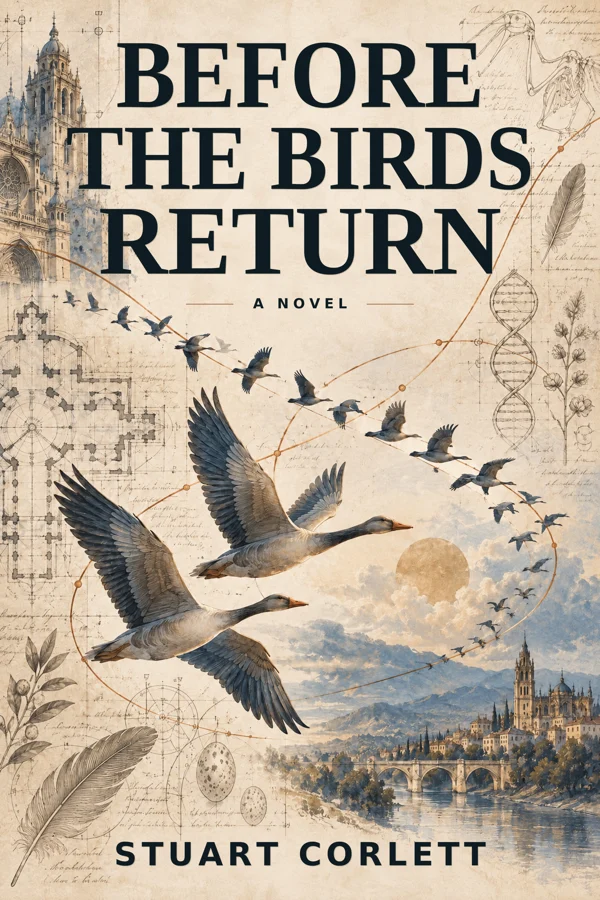
In Before the Birds Return, a scientific mystery and the possibility of renewed love occupy the same lives. Anneliese and Gabriel cannot put their history neatly aside while the larger problem is solved. Their ability to trust one another matters alongside their ability to understand what is happening.
That gives a scientific question human weight. The person looking at the evidence also has memories, loyalties and fears.
When a good intention acquires power
Many of my stories return to the wish to help. It is a generous wish. It can also make a person reluctant to hear that their help is unwanted, or that its effects are more complicated than they intended.
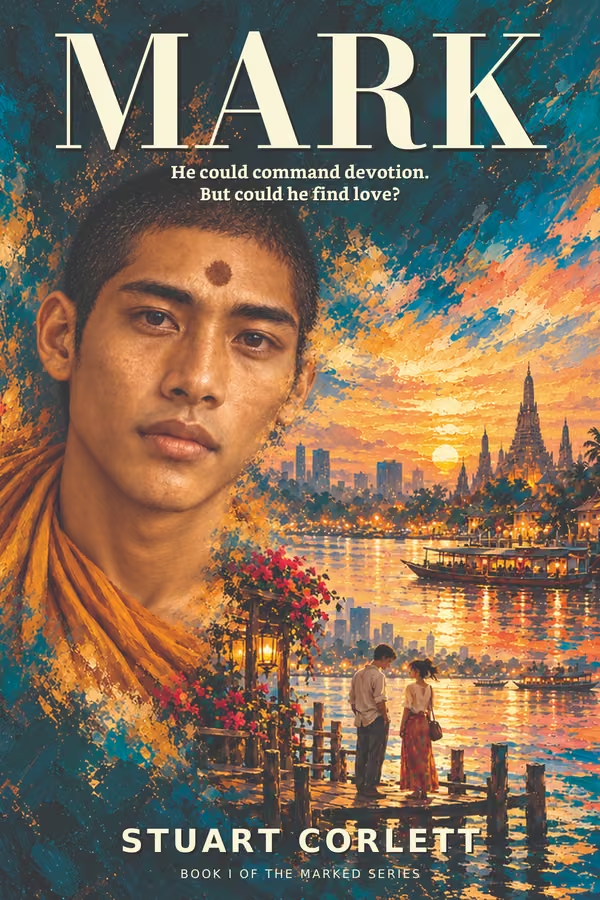
The MARKED novels explore that difficulty through a family whose unusual gifts create unusual responsibilities. The question becomes especially uncomfortable when influence reaches into another person's feelings. Relief may be welcome. But who decides what should be removed from a person's emotional life, and can that person still refuse?
Fiction gives me room to stay with the discomfort. A character can sincerely believe they are acting compassionately and still need to be challenged. The people affected by a decision deserve more than a supporting role in the decision-maker's account of their own goodness.
I am interested in the moment when listening becomes harder than explaining. It is often the moment when a story has something useful to ask.
An invention cannot make every decision for us
In the Maksym Kovalenko series, technical imagination grows out of a world damaged by war. Making and repairing things can restore a sense that action is possible. An invention can change the available choices.
Yet someone still has to choose. Maksym and Kateryna have to consider what they know, whose account they trust and who will live with the consequences. Love and family do not disappear because a problem has an engineering dimension.
That continuing responsibility interests me as much as the imagined technology. Even if a machine can prevent a particular harm, people still have to build trust, share power and remain answerable for what they do.
The boundary I want to keep visible
A plausible explanation can make a scene feel convincing. That is useful to a novelist, but it creates a responsibility. Readers should be able to distinguish the scientific starting point from the step I have invented to make the story possible.
I can imagine an extraordinary biological mystery or a technology beyond what is available. I cannot reasonably ask the reader to treat my ability to describe it as proof that it exists.
In What the Earth Remembers, the promise of a discovery meets the hopes of people for whom an answer could change everything. That pressure is part of the story. So is the difficulty of telling the whole truth when a more confident answer would be easier to welcome.
Hope deserves care. One way of caring for it is to be honest about uncertainty.
What I hope a reader takes away
I want the story to be worth reading as a story. The people should matter. Their choices should have consequences. Curiosity should carry the reader forward.
I also hope a question remains after the plot has moved on. Perhaps it is about what we call evidence. Perhaps it is about the freedom of someone we want to help. Perhaps it is simply the realisation that we understood a character's certainty until we saw what that certainty cost somebody else.
A novel lets us spend time inside those choices. For me, that is one of the strongest reasons to bring science and fiction into the same conversation.
If you would like to find a starting point, my science-inspired fiction reading guide introduces the different series and the questions each follows.